
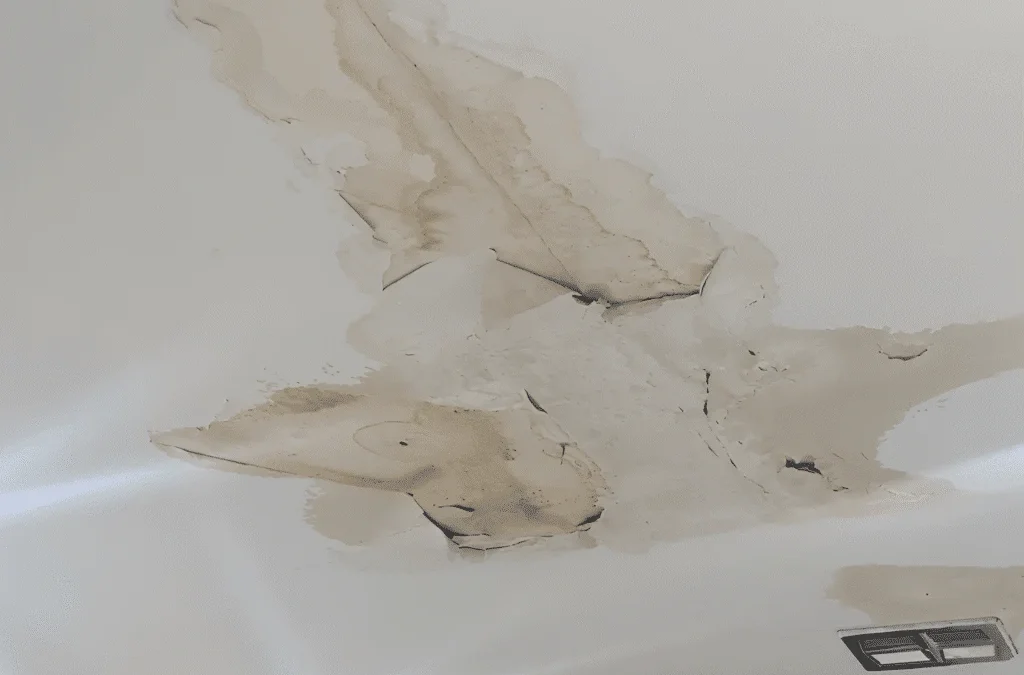
Why wording matters when dealing with insurance.
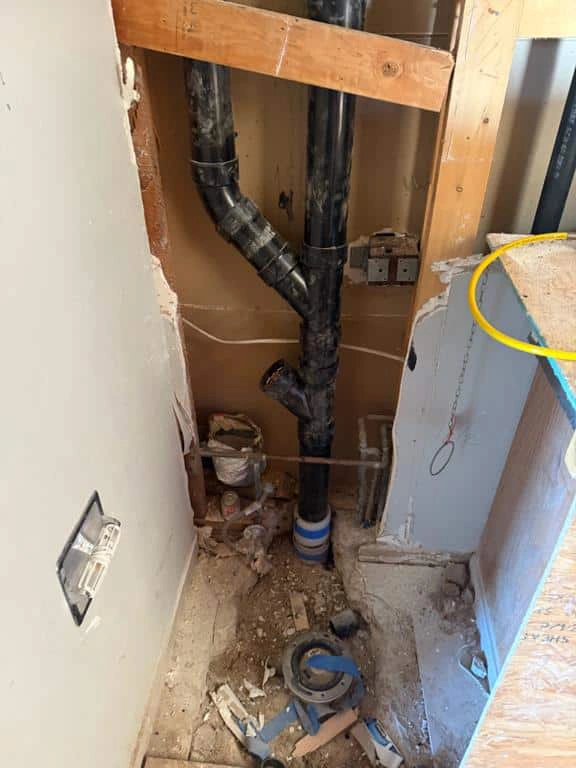
What Is Usually Considered Water Damage?
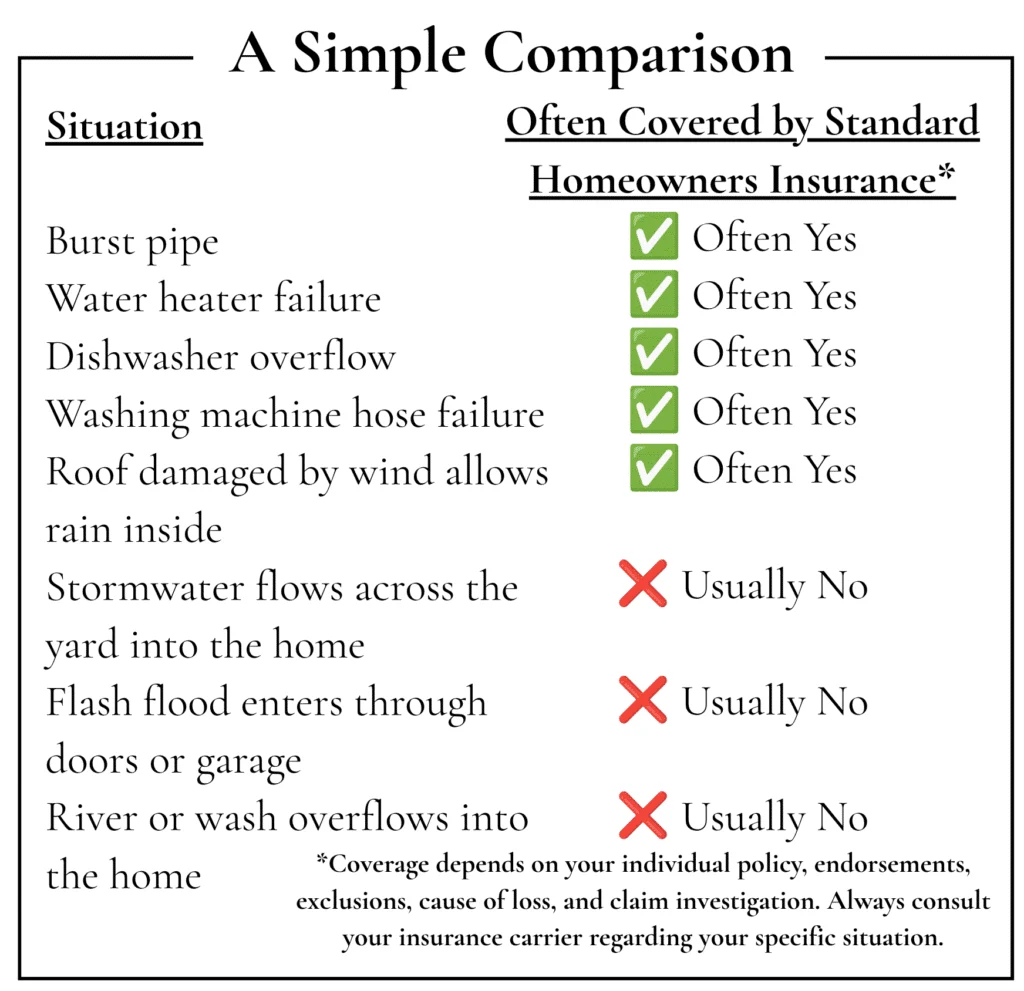
While every insurance policy is different, homeowners insurance often covers sudden and accidental water losses.
Common examples include:
- Burst or frozen pipes
- Water heater failures
- Washing machine hose ruptures
- Dishwasher overflows
- Refrigerator water line leaks
- Plumbing supply line failures
- Rain entering through roof damage caused by a covered event, such as wind or hail
- Water used to extinguish a house fire
USAA explains that homeowners insurance generally helps cover “sudden and accidental” water damage, while flooding is handled differently under separate flood insurance programs.
The important takeaway is that the water originates from a covered event—not from rising or flowing groundwater.
What Is Usually Considered Flood Damage?
Flood damage generally refers to water that originates outside the home and enters after flowing across normally dry land.
Examples include:
- Flash flooding
- Overflowing washes, rivers, or canals
- Heavy stormwater running across your property
- Water entering through doors, garages, or foundation openings after pooling outside
Allstate notes that standard homeowners insurance generally does not cover flood damage, even when the flooding results from heavy rainfall.
This distinction surprises many Arizona homeowners during monsoon season.
Should You Avoid Saying “Flood”?
Not at all.
The most important thing you can do when speaking with your insurance company is accurately describe what happened.
Instead of trying to determine whether you experienced “water damage” or “flood damage,” explain the source of the water.
For example:
- “A pipe burst in the attic.”
- “The water heater failed.”
- “Wind damaged the roof and rain entered the home.”
- “Stormwater came across the yard and entered through the front door.”
Those facts help your insurance representative determine how your policy applies.
Trying to classify the event yourself isn’t necessary—the facts tell the story.
Don’t Wait to Begin Water Damage Repair
One of the biggest mistakes homeowners make is waiting for insurance decisions before addressing the water.
Unfortunately, moisture doesn’t wait.
Within a short period of time, water can:
- Saturate drywall and insulation
- Warp wood flooring
- Damage cabinetry
- Affect electrical systems
- Create conditions favorable for mold growth
The longer water remains inside a structure, the more extensive—and expensive—the repairs can become.
Professional water damage repair begins with emergency mitigation, including water extraction, moisture mapping, structural drying, dehumidification, and careful monitoring to prevent additional damage.
In many cases, your restoration contractor and your insurance company can work simultaneously. Drying the structure quickly helps preserve your property regardless of how the claim is ultimately resolved.
The Bottom Line
During Arizona’s monsoon season, every minute counts.
Whether you’re dealing with a broken pipe, storm-damaged roofing, or water entering your home after heavy rain, the first priority is protecting your property from further damage.
While insurance companies may distinguish between water damage and flood damage, homeowners don’t need to become insurance experts overnight. Your job is to document what happened, contact your insurance carrier, and call a trusted restoration company that can begin the drying process immediately.
At American Allied Restoration, our experienced mitigation professionals respond quickly to water emergencies throughout Arizona. We work with homeowners to stabilize the situation, begin professional water damage repair, and help document the damage while you navigate the insurance process.
If water has entered your home, don’t wait. The sooner mitigation begins, the better your chances of minimizing damage and protecting your property.